
Damp, mould or moisture in your home. Understand the cause before spending money.
Whether you've noticed black mould, damp patches on walls, condensation problems or a persistent musty smell — an independent inspection gives you clear answers about what's actually happening and what, if anything, needs to be done.
Recognise any of these in your home?
These are the most common reasons homeowners contact Thomas Damp Surveys.
Damp patches on walls
Wet or discoloured patches on internal or external walls, particularly at low levels or around window reveals, can have several different causes — not all of them structural.
Black mould
Black mould in corners, on window reveals or behind furniture is almost always caused by condensation — warm moist air meeting cold surfaces. It's a ventilation issue, not damp-proofing.
Musty smells
A persistent musty or stale smell, particularly in older properties, can indicate trapped moisture, poor ventilation or organic growth — each requiring a different approach.
Condensation
Heavy condensation on windows, cold walls and surfaces — especially in kitchens, bathrooms and bedrooms — points to humidity and airflow problems rather than structural damp.
Wall staining
Tide marks, salt deposits (efflorescence) or brownish staining on masonry or plaster can indicate historical water movement — but the source requires proper investigation.
Peeling paint or plaster
Bubbling paint, flaking plaster or crumbling render can be surface symptoms of moisture beneath — or of old treatments that have failed. An independent inspection clarifies the cause.
The risk of getting a diagnosis from someone who sells treatments
Many free damp surveys are connected to companies that also sell remedial work. That does not automatically make the advice wrong, but it does mean the diagnosis is not independent.
In practice, the actual problem is often condensation from a poorly ventilated bathroom, a missing or blocked airbrick, or an extractor fan that doesn't reach outside. An independent inspection separates the cause from the sales process.
Independent surveys start from £299. A misdiagnosed damp treatment can cost thousands — and may not resolve the issue at all.
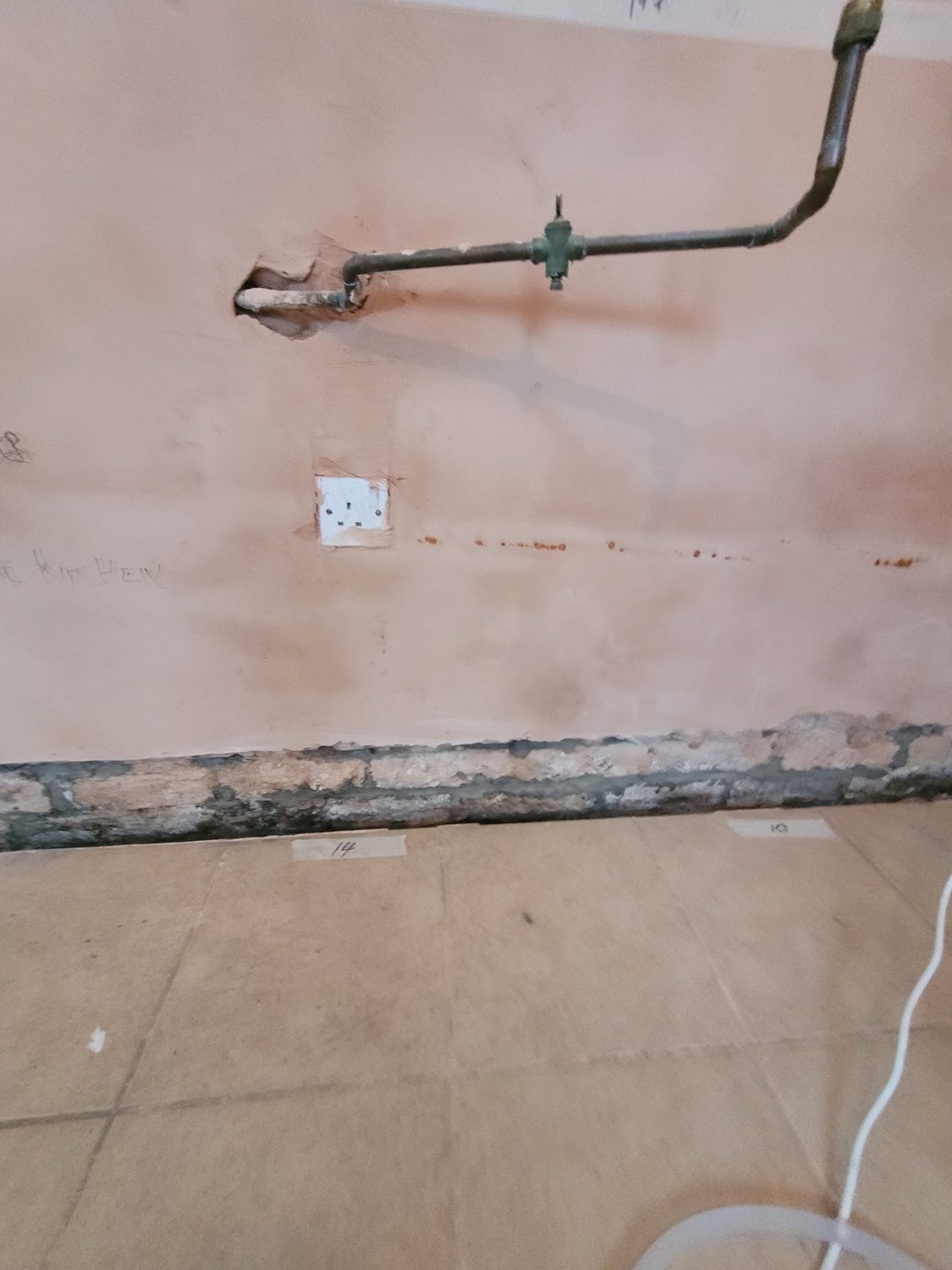
What actually causes damp in UK homes
Understanding the type of damp is essential before any remedial work is carried out.
Condensation
The most common cause of mould and damp in UK homes. Warm, moist air produced by cooking, bathing and breathing meets cold walls and windows and deposits moisture. Addressed through improved ventilation and heating — not chemical treatment.
Penetrating damp
Water entering through defective roof coverings, blocked gutters, cracked render, failed pointing or poorly installed windows. The remedy is fixing the defect — not internal treatment.
Rising damp
Genuine rising damp occurs when groundwater is drawn up through masonry where the damp-proof course has failed or is absent. It is less common than widely claimed and requires careful diagnosis to confirm.
Common questions
Black mould is almost always caused by condensation — warm, moist air produced by cooking, bathing and everyday living meeting cold wall or window surfaces and depositing moisture. It grows in corners, on north-facing walls and behind furniture where air circulation is poor. It is a ventilation and heating issue, not a structural damp problem, and does not require chemical injection treatment.
No. Rising damp is one specific type of moisture problem — groundwater being drawn up through masonry where the damp-proof course has failed or is absent. It is considerably less common than it is diagnosed. The majority of damp in UK homes is caused by condensation (roughly 70%), followed by penetrating damp from building defects. Misdiagnosis is widespread because the symptoms at wall level can look similar, and because some companies that offer free surveys profit from treating whatever they find.
Cold walls attract moisture from the air — this is surface condensation. It is particularly common on external walls with poor insulation, on walls where furniture is pushed flush against them (restricting air movement), and in rooms that are intermittently heated. It can make walls feel damp to the touch and cause mould growth, even when there is no structural water problem.
Yes — it is the most common cause of household mould in the UK. When moist air cannot escape a building and lands on cold surfaces, it deposits moisture that mould spores use to grow. The solution is improving how the property breathes: better extract ventilation, avoiding drying clothes indoors, keeping heating consistent and ensuring air can circulate. An independent inspection will confirm whether condensation is the cause and what specifically needs to change.
For an unbiased diagnosis, choose an independent surveyor who does not sell treatments. A free damp-proofing survey is often connected to a company that may later quote for remedial work. An independent inspection identifies the cause without any commercial interest in the outcome, so the report is based on evidence. Once you know what you're dealing with, you can decide whether any contractor involvement is needed at all.
No. Stephen uses non-invasive moisture detection equipment as standard. He may need access to affected rooms, roof spaces or under-floor areas if relevant, but no damage is caused to walls, floors or finishes during the inspection. A borescope inspection (for cavity walls) requires a small drill hole in a mortar joint which is repointed after use.
Most residential inspections take between 60 and 90 minutes depending on the size of the property and the number of areas to assess. The written report follows — same day where possible. Contact Stephen to arrange a convenient time.
Get clear answers about damp in your home
From £299. Written report included. No treatments sold. Serving homeowners across Worcestershire and surrounding counties.
What a thorough damp inspection actually involves
A credible damp diagnosis is not a single moisture meter reading on a wall. It involves a systematic assessment of the property to understand how and where moisture is behaving — and, critically, why.
During every inspection, Stephen assesses the following:
- Moisture behaviour across wall profiles — readings at multiple heights and positions to distinguish condensation patterns from rising or penetrating damp signatures
- Ventilation adequacy — extract ventilation in kitchens and bathrooms, natural ventilation through windows and airbricks, sub-floor ventilation where relevant
- Thermal patterns — cold bridging points, insulation deficiencies and surface temperature differentials that contribute to condensation
- Roof and gutter condition — potential sources of water ingress from above, particularly around chimney stacks, valleys and abutments
- External ground levels — whether soil, paving or landscaping has raised ground levels above the DPC
- Cavity wall condition — where relevant, borescope inspection to identify bridging, insulation settlement or debris
- Condensation risk points — cold wall surfaces, thermal mass, furniture placement and occupant behaviour indicators
The difference this makes: the same moisture reading at low level on an internal wall can have five or six entirely different causes. Accurately identifying which one requires assessing the full picture — not just the reading.
Not all damp is rising damp
This matters because the treatments are completely different. Applying a chemical damp-proof course to a wall with a condensation problem achieves nothing. Improving ventilation in a property with genuine rising damp will not stop groundwater from entering.
Getting this wrong can be expensive and disruptive, and may leave the underlying problem untouched.
Independent diagnosis exists precisely to distinguish between these cases without a commercial interest in the answer.
Providing independent damp surveys for homeowners across Worcester, Kidderminster, Malvern, Stourport-on-Severn, Droitwich, Redditch, Hereford, Gloucester and surrounding areas. Check coverage for your postcode →
Get clear answers about damp in your home
From £299. Written report included. No treatments sold. An honest assessment from 30+ years of experience.